
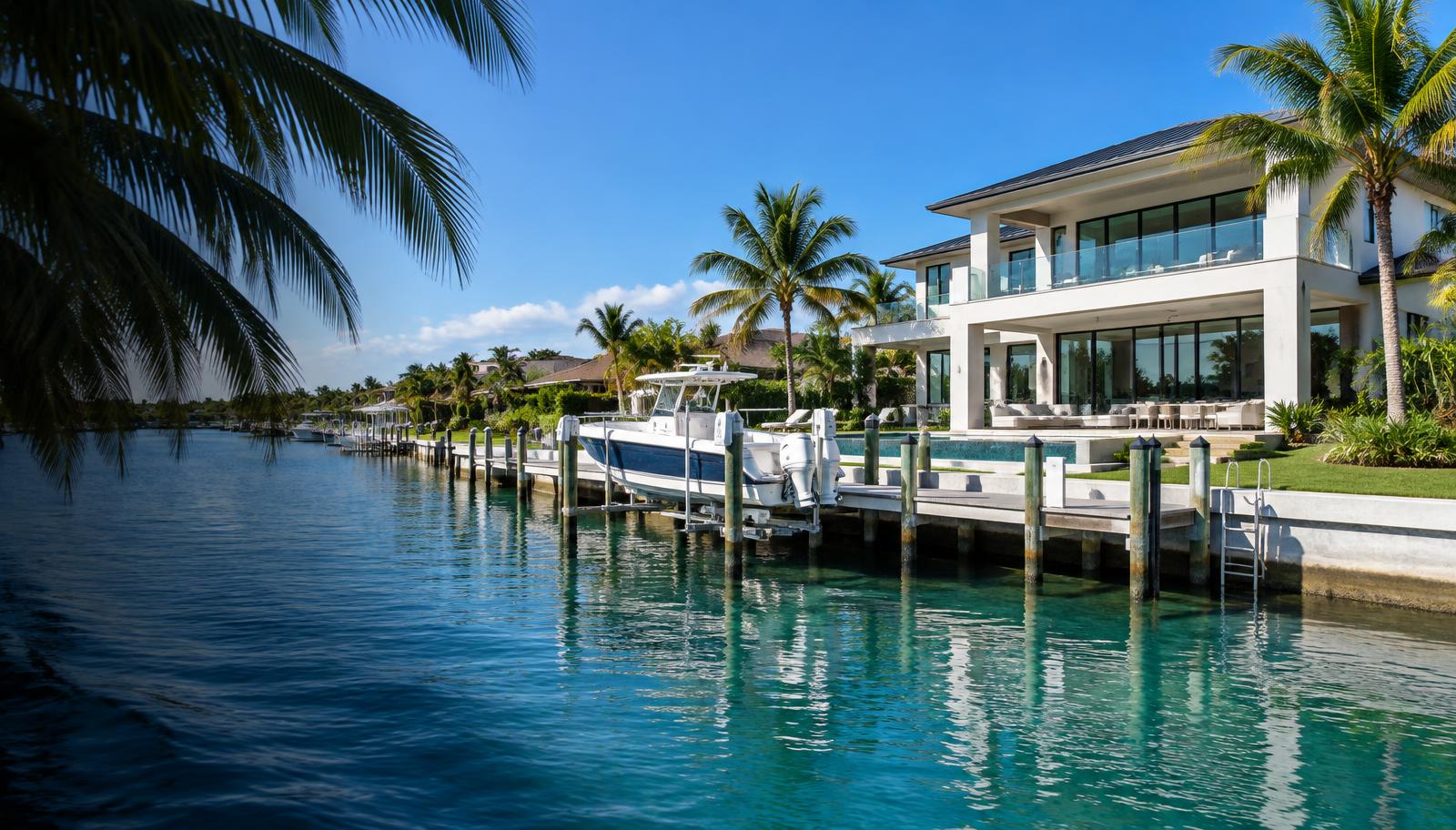
A waterfront listing can make the decision feel simple: you like the house, the view and the idea of stepping onto a boat from your own yard. In Southwest Florida, the water behind a property is part of the real estate, not merely scenery. Its route, depth, structures and exposure can determine whether the home works for the way you intend to use it.
The right diligence starts before an offer and continues through inspection. Ask for documents early, bring in specialists when the property calls for them and verify conditions for the exact parcel. A nearby house can face a different canal route, elevation or insurance picture.
Start with the route from the dock
“Gulf access” is not a complete description. Direct or sailboat access generally means a route without a fixed bridge limiting vessel height. Bridged access may still be completely suitable, but the bridge clearance has to work for the boat you own or plan to own. Trace the full route from the property to open water and identify every bridge, lock or other restriction along the way.
Canal width and depth matter too. A wide basin can make turning and docking easier than a narrow canal. Depth changes with tides, weather and maintenance, so a visual impression during one showing is not enough. The useful question is whether the route works for the vessel and schedule you actually have. Confirm current measurements and navigation conditions with the appropriate local sources and marine professionals.
Also establish whether the water is fresh or salt. Freshwater canals can offer a water view and small-boat use without providing a route to the Gulf. Saltwater access may suit offshore boating, but it also puts docks, lifts, seawalls and boat equipment in a more corrosive environment. The listing language should never substitute for a map and a direct review of the route.
Read the seawall as part of the structure
A seawall is easy to admire from the patio and easy to overlook as a major property system. Look for movement, cracking, erosion, voids behind the wall and signs that soil is washing out. Ask when it was built, what repairs have been made and whether permits are available. A general home inspection may note visible concerns, but a marine contractor or engineer can evaluate the wall in the context of its construction and site.
Ownership and maintenance responsibility should also be clear. Do not assume the visible wall belongs entirely to the property or that a neighboring condition has no effect. Survey information, boundaries and any shared obligations deserve review. If replacement or significant repair may be approaching, obtain current professional guidance for that exact wall rather than borrowing a cost from another property.
Match the dock and lift to real use
A dock can be attractive and still be wrong for a particular boat. Confirm its dimensions, materials, condition and permitted configuration. For a lift, verify capacity against the fully loaded vessel rather than an empty published weight. Beam, hull shape, motor position and bunk arrangement all affect fit. Electrical service and water at the dock should be inspected as working systems, not treated as accessories.
Permit history matters. Compare what is physically present with the available approvals for the dock, lift, canopy and related work. If you expect to expand or replace something, ask the relevant authority and a qualified contractor what is possible before treating that future plan as part of the property's value.
Put elevation, flood and insurance work up front
Flood-zone designation and elevation can vary parcel by parcel, including within the same neighborhood. Request the available elevation certificate and confirm the current flood designation. Then discuss both with an insurance professional who can review the specific address and building. The foundation type, finished-floor elevation, enclosure details, roof, openings and prior claims can all affect the conversation.
Insurance belongs in the diligence period, not the final days before closing. Ask for the seller's available policy information and loss history, while understanding that another owner's coverage or premium does not guarantee your terms. Obtain guidance for your intended occupancy and coverage. If work followed a storm, review permits, invoices and completion records so the physical condition and documentation tell the same story.
Waterfront ownership can be deeply rewarding when the property fits the buyer's actual plans. The sound approach is to evaluate the house, water route, marine structures and risk documentation as one connected purchase. Joseph can help organize those questions and keep the attraction of the view from crowding out the practical work.