
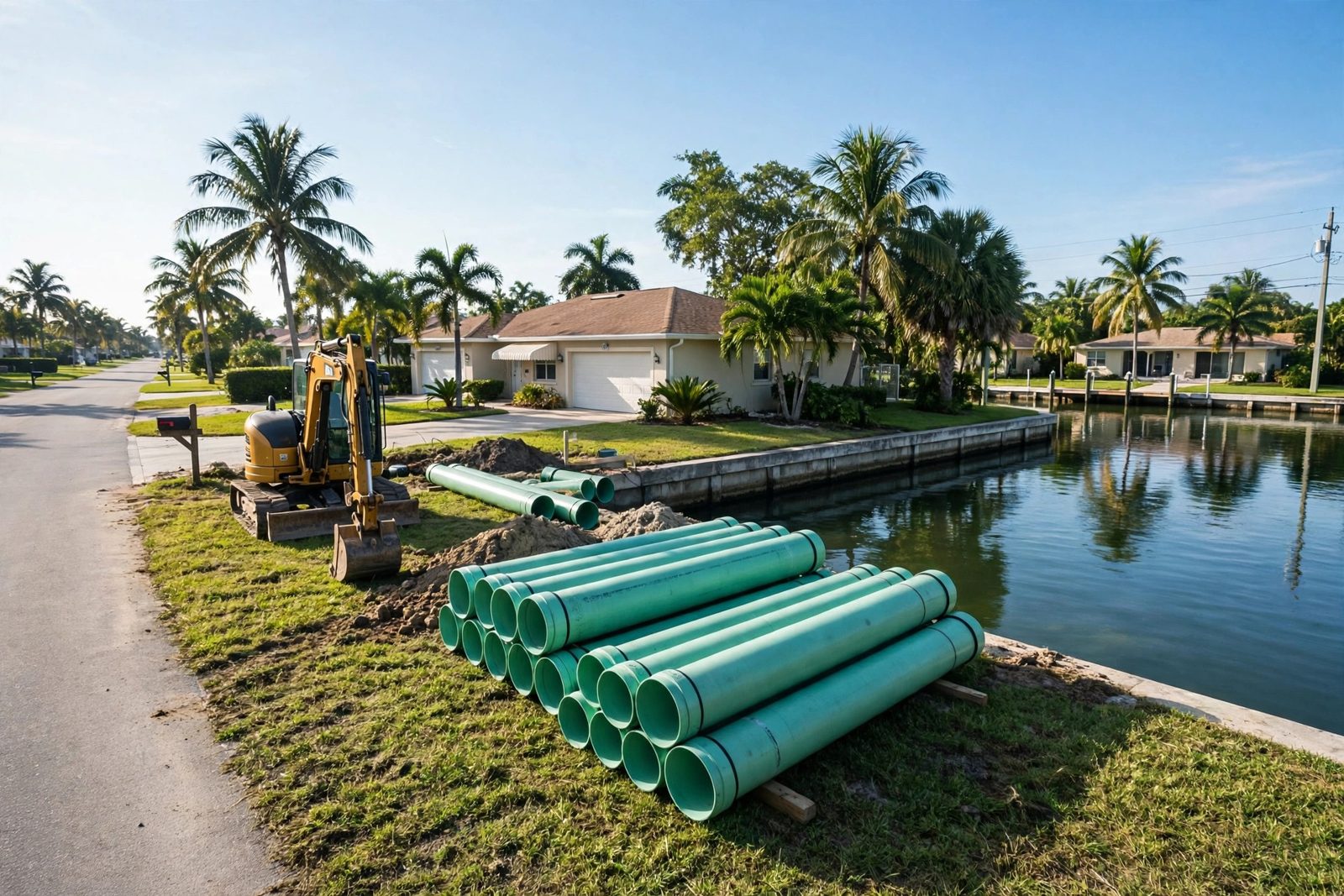
Cape Coral is in the middle of one of the largest septic to sewer conversions in Florida, carried out area by area under the city utilities extension program. If your home still runs on a septic tank and sits in a current or announced conversion area, a city assessment is part of your property's financial picture whether you sell this year or not. Buyers and their lenders will find it, so the only real choice is whether you present it clearly or let it surface mid-contract.
This guide explains how the assessment works in Cape Coral, what sellers are expected to disclose, and the pricing and negotiation approaches that keep a conversion area home moving.
How the Cape Coral conversion assessment works
When the city extends central sewer and water into a neighborhood, it charges the cost back to the properties that benefit through an assessment. The assessment is typically split into pieces: a capital facility or impact component, a line extension component based on the lot, and the cost of connecting your home and abandoning the septic tank, which is the owner's job once sewer is available. Owners can usually pay the assessment in full or finance it through the city over a period of years, in which case it appears as an installment on the property tax bill.
The key point for a seller: the assessment attaches to the land. It does not disappear when you sell, and any unpaid balance or ongoing installment transfers to the buyer unless your contract says otherwise. That makes it a negotiation item, not a defect, and it should be priced and presented that way from day one.
Find out exactly where your property stands
Before you list, pull three facts. First, whether your address is in a completed, active, or future conversion area, which the city publishes by project area. Second, your current assessment balance and whether you are paying it in installments. Third, whether your home has already been connected or is still on septic. Two houses on the same Cape Coral street can sit in different positions, and buyers price uncertainty far more harshly than they price a known number.
Put the numbers in writing for your listing file: total assessment, amount paid to date, remaining balance, and the annual installment if financed. A buyer who sees the full picture in the first week rarely reopens it at the closing table.
What you must disclose
Florida sellers must disclose known facts that materially affect the value of the property and are not readily observable. A pending or active sewer assessment, a septic system due for mandatory connection, and any city notice you have received about your area all qualify. Disclose them on the seller's disclosure and in your listing remarks strategy with your agent, accurately and without editorializing.
Disclosure done early protects you twice: it keeps the contract from collapsing during the inspection and financing window, and it removes the buyer's strongest argument for a late price cut.
Pricing and negotiating around the assessment
Homes already connected to city sewer and water often command a premium in Cape Coral because the buyer avoids the entire conversion cost and disruption. If your home is not yet converted, expect buyers to discount by roughly the remaining cost they will inherit. You have three practical levers: price the home with the assessment visibly accounted for, offer a closing credit sized to the remaining balance, or pay the assessment off at closing from your proceeds so the buyer starts clean.
Which lever wins depends on your buyer pool. Relocating buyers comparing your home against already converted listings respond best to a clean payoff or credit. Local buyers who understand the program often accept the installment as part of the tax bill. Your agent should model the net of each option before you choose.
Talk to Joseph
Selling in a Cape Coral conversion area is a math and presentation problem, and both are solvable before you list. Call Joseph C. Brown of Epique Realty at (941) 677-5002 or email JoeBrown@Epique.me for a pricing analysis that includes your assessment position, not one that ignores it.
Questions sellers ask
Frequently asked questions
Is septic to sewer conversion mandatory in Cape Coral?
In areas where the city has extended central sewer, connection becomes mandatory once the service is available to your property, and the septic tank must be properly abandoned. The city notifies owners in each project area with the timeline and requirements that apply to their address.
Who pays the sewer assessment when a Cape Coral home sells?
Whoever the contract says. The assessment runs with the land, so an unpaid balance or installment plan transfers to the buyer by default. Many sellers pay it off at closing or credit the buyer, but it is a negotiated term, not a rule. Get the exact balance in writing before you price the home.
Do I have to disclose a pending sewer assessment to buyers?
Yes. A known assessment and a mandatory future connection are material facts under Florida disclosure law. Disclose them on the seller's disclosure form and price the home with the numbers visible. Early disclosure prevents the contract problems that late surprises cause.
Should I connect to sewer before I sell?
Sometimes. If connection is available and your timeline allows the work, a connected home removes the buyer's biggest unknown and can support a stronger price. If connection is not yet available in your area, you cannot connect early, and clear documentation of the assessment matters more than any promise.